Understanding the User Experience: Lessons from an Active Citation Piloteer


QDR Blog

skarcher

DOI For this blog post: https://doi.org/10.59350/5znft-x4j11

The scientific response to the global pandemic has shown, among other things, the value of open science, collaboration, and data sharing. In that spirit, QDR will support efforts to share qualitative and multi-method social science data underlying COVID-19 related research.

sign for COVID-19 testing center
Photo by Colin D on Unsplash

Social scientists are contributing important insights to understanding and addressing challenges caused by the pandemic. There is a growing public list of ongoing social science work related to COVID-19. Major funders such as NSF and SSRC are soliciting research proposal as part of dedicated projects, and journals such as Perspectives on Politics are inviting manuscripts for special issues.

Guided by our mission, we at QDR believe that the impact of these efforts will be enhanced if underlying data are shared ethically wherever possible. We will work with interested researchers to devise a plan for organizing and sharing data, and will curate those data, publish it on QDR (with appropriate access controls if warranted), and preserve it for the long-run.

Please contact us at qdr@syr.edu if you are interested in a consultation for your project or simply want to learn more about the repository.

1a36fd60-67d8-4e6e-a01d-56f0c57241ae
skarcher

DOI: https://doi.org/10.59350/5znft-x4j11

Welcome to Love Data Week. Every year, research data professionals from libraries, data repositories, and other organizations celebrate great ways to use data and best practices in taking care of research data. You can find lots of us tweeting using #LoveData20 or #LoveDataWeek. At QDR, we’re celebrating this year by releasing our first software tool for researchers, the R package archivr (pronounced “archiver”).

The Problem

If you have done any research using web sources, you have probably run into this issue:

Firefox I can't find this page message

You used a web resource – a blogpost, a newspaper article, a statement from an organization – but when you want to come back to it, you can no longer find it. Even if you were smart enough to save the page at the time or you used a tool like Evernote or Zotero to take a Snapshot, citing the now gone webpage is of little help to other researchers who may want to follow up on your claims about it

A Solution

When this happens to you as a reader – e.g., when, you find a webpage cited that is no longer online, you may have used the WaybackMachine, an incredibly useful tool by the Internet Archive, a non-profit organization. The WaybackMachine allows you to look up a website and find an archived copy. Webpages associated with the Love Data Week event actually provide some great examples of this – the event used to be called “Love Your Data Week” but had to drop the name, and associated website https://loveyourdata.wordpress.com/, due to an existing trademark. While the live pages have disappeared, the Internet Archive allows us to find many archived copies of this site.


Old Love Your Data Week banner
The banner for the first Love (Your) Data Week in 2016 from the WaybackMachine.


But this only works for sites that the Internet Archive has saved automatically. Sites that are only available for a short time and/or haven’t been linked to widely are often not archived in the Internet Archive. This is particularly true for non-English sources.

This is where archivr comes in. It allows you to automatically save all URLs in a spreadsheet or a Word file ro the Internet Archive or perma.cc, a similar service run by a consortium of libraries led by the Harvard Law Library. So if you, for example, listed 100 URLs you consulted in an Excel sheet, you can make sure they’re archived. If you’ve written a chapter, or even an entire dissertation, archivr will find all URLs in the text and make sure they are archived.

By using archivr, you can be sure that scholars will always have access to the web pages you relied on.

At QDR, we have been using this tool for curation for several months now. We worked together with Agile Humanities’ Ryan Deschamps in building the original prototype and have since taken over maintenance of the tool.

An Example

In her masterful book Authoritarian Apprehensions, Lisa Wedeen draws, among other things, on 100s of web sources, many of them from Syria and thus particularly prone to disappearance. When curating data accompanying Lisa Wedeen’s book, QDR used archivr to make archived copies of all those sources, ensuring they’ll remain available. If readers of the book find a URL that is no longer working, they can simply search for it in the spreadsheet of archived URLs on QDR and find an archived copy instead

Excel sheet with archived URLS

Using archivr

Archivr is easy to use, including for R-novices. Basic installation and usage instructions are included in the readme and detailed instructions and examples are in the built-in documentation.

If you are using archivr, please let us know what you think. If you have any feature requests or bug reports, email us at qdr@syr.edu or create an issue on the project’s github repository.

fbfffc11-1c5e-40bf-9a67-48b54df9da40
skarcher

QDR Can Help

In a recent “Dear Colleague Letter”, the National Science Foundation (NSF) encourages researchers to adopt best practices in managing research data. NSF frequently uses “DCLs” to make researchers aware of funding priorities and preferred practices, so if you are thinking of applying for NSF funding, you should pay close attention to such pronouncements.

Endorsed by US Social Science Data Repositories

The Data Preservation Alliance for the Social Sciences (< a href="http://www.data-pass.org/">Data-PASS), in which many of the social science data repositories in the US – including QDR – are organized, has strongly endorsed the NSF's efforts on this. Data repositories can be instrumental in helping researchers achieve the "effective practices for data" that NSF is looking for.

Top of NSF DCL on Effective Practices for Data

The NSF points to two specific things it wants researchers to pay close attention to:

1. Persistent IDs for Data

The most important “persistent identifier” in scholarly publishing is the Digital Object Identifier (DOI). You likely have seen DOIs, which always start with “10.” and allow you to create stable links to resources (e.g. the link to my article on DOIs below is its DOI, 10.5281/zenodo.2563130, prefix it with https://doi.org and you have a permanent link to the paper: https://doi.org/10.5281/zenodo.2563130). NSF wants you to share your data with a persistent identifier not just because of the stable linking, but also because permanent identifiers help link different scholarly outputs together and make their metadata accessible (I have written a slightly longer text about DOIs and their usefulness for QMMR).

How QDR can help you: When you deposit data with QDR, your data will automatically receive a DOI. We go even further and provide separate DOIs for every file you deposit. This is particularly important for qualitative data, where someone may want to cite a specific interview or document that is part of your data.


Suggested citation for a QDR data rpoject with DOI

Suggested citation for a QDR data project with DOI

2. Machine-Readable Data Management Plans

NSF has been requiring data management plans (DMPs) to be submitted with every grant application since 2011. Feedback from researchers suggests that NSF program officers are paying increasingly close attention to the content of these plans. In addition to this requirement, NSF now also suggest you make your DMP “machine readable,” i.e. provide it in a format/structure that is easy for computers to parse. Thankfully you don’t have to do this by yourself. If you use the DMP Tool, a very useful online tool that helps you write data management plans, your DMP will automatically be machine readable.

How QDR can help you: QDR has extensive guidance on data management and data management planning, specifically for qualitative data. We will also consult with you on your data management (at no charge) and offer a template for inclusion in your DMP if you’re planning to deposit data from your project with QDR (but please make sure to get in touch with us beforehand to make sure your data are a good fit for QDR).

And there’s more

If you’ve recently visited QDR, you may have seen that we now charge a deposit fee unless your institution is a QDR member (though we do offer waivers and are currently able to do so quite generously).

NSF previously indicated that it would cover such fees for funded research, and reiterates this in its DCL:

In some cases, PIs may have to pay a "data deposit fee" to place data in repositories that then make the data more accessible to others. A "data deposit fee" is a one-time charge paid at the time a dataset is deposited into a data repository. In exchange for this fee, repositories commit to making the data available into the future. NSF has clarified its policies on data deposit fees: these fees are allowable expenses in proposal and award budgets.

We are happy to provide you with a deposit-fee quote for your NSF budget.

-

DOI: https://doi.org/10.59350/5znft-x4j11

b300b30e-1482-4f39-959a-4d2bfe9f0913
skarcher

When QDR adopted the Dataverse platform in early 2017, one of our goals was to improve the software, development primarily with quantitative data in mind, for qualitative data and the researchers using it. A little more than one year into using Dataverse software at QDR, we have made significant strides in this direction. Here is a quick overview of some of our biggest additions. I also talk about some of these in the video below.

Qualitative data come in many formats – text, audio, video, images, and more – yet textual data make up by far the largest component of QDR’s (and other qualitative data repositories’) holdings. We therefore care deeply that these data are easy to find. In order to do this, we need to go beyond the description of projects: we need to allow users to search what’s inside the data files. For tabular, quantitative data, Dataverse already allows for this, already extracting variable-level metadata and including it in searches. The analog for qualitative data is straightforward: users need to be able to search for text in files.

Full text search of text and PDF files is now available in QDR and, based on our contributions, in other repositories using Dataverse software such as the Harvard Dataverse. Many of the data files in QDR, however, are restricted to be viewed only by registered users (and some carry further restrictions). How do we make these findable without exposing potentially sensitive contents? Any search on QDR will only show the results the searching users has access to: an guest user’s search will mostly encompass documentation, an authenticated user’s search most files, and an admin’s search all files, in both published and unpublished projects. Full text search is available both across data projects and within any project (the .gif below shows that latter).

Multimedia Viewers

Other common file types for qualitative data are images, audio recordings, and videos. In the standard Dataverse software, the only way to view such files is to download them and then open them in a viewer on your computer: that’s a lot of steps! Moreover, as you’re looking at larger video files, this entails downloading massive files before you even know if you’ll find them useful.

QDR therefore implemented a set of lightweight viewers, which allow you to open a large variety of files (text, html, pdf, image, audio, video) in a new tab for quick viewing. They’re easily accessible from a button next to the file (see .gif below). While QDR is currently the only Dataverse installation using these viewers, their code is open and easy to run and several other repositories have already indicated that they will use them.

Benefitting from a Strong Open Source Community

While we at QDR focus our development efforts on Dataverse features that are particularly important for qualitative data, many such features also are developed by an active open source community, coordinated by the wonderful team at Harvard’s Institute for Quantitative Social Science (IQSS). Here are some of the biggest gains for us, as a repository for qualitative data, from the last year:

  1. Data projects with many files work much better now and it is easily possible to select and download all files in such projects. Many of our projects have hundreds, some thousands of files, so this is of particular importance for qualitative data.
  2. Individual files in QDR now have Digital Object Identifiers (DOI), making them clearly citeable. Files in qualitative data projects often make sense by themselves (think an individual interview transcript or a historical documents), and we’ve had requests for this in the past.
  3. We are now able to display and make available for download data files organized in folder structures. If you upload a ZIP file containing folders to QDR, these are automatically preserved. Given the large number of files in projects, organization such as this is particularly important for our data. See e.g. the recently published deposits from Alisha Holland and Matt Hitt for two examples of using folders effectively to organize and display data.

Are there any other areas in which you think we should do better for qualitative data? We’re always looking to hear from you by email or on twitter.

doi:10.59350/5znft-x4j11

1db69ba3-aa40-4496-a020-2246a1d9ae61
skarcher

Data Curation at the Qualitative Data Repository

On November 7, Sebastian Karcher, QDR's associate director, and Dessi Kirilova, our curation specialist, hosted a webinar providing deep insights into QDR's curation process based on two data projects. Around sixty participants attended live and many others inquired about a recording. The recording of the webinar is now available on YouTube.

Find the slides for the webinar here

The two projects discussed in depth were:

  • Clarke, Killian B. 2018. "Data for: When do the dispossessed protest? Informal leadership and mobilization in Syrian refugee camps". Qualitative Data Repository. https://doi.org/10.5064/F6CN723S. QDR Main Collection. and
  • Loyle, Cyanne E.;Davenport, Christian;Sullivan, Christopher. 2018. "Association for Legal Justice (ALJ) Human Rights Testimony, Northern Ireland". Qualitative Data Repository. https://doi.org/10.5064/F6LHMHJR. QDR Main Collection.

Sebastian also discussed QDR's recently launched institutional membership and what it offers to member institutions. Find out more about institutional membership here, and please be in touch with any questions.

(updated on 2018-12-04 to reflect publication of 2nd data project)

acf06197-dd2b-4af4-a2b6-15fef066a0a0

Guest post by Veronica Herrera, Assistant Professor of Political Science at the University of Connecticut.

In the fall of 2013, I participated in a pilot program for the Qualitative Data Repository at Syracuse University on “active citation” (AC). I was actually producing the revise-and-resubmit (R&R) version of the article on which I was piloting AC—subsequently published in World Development, “Does Commercialization Undermine the Benefits of Decentralization for Local Services Provision? Evidence from Mexico’s Urban Water and Sanitation Sector” (Herrera 2014)—so it was a unique opportunity to write up research while aiming for new transparency practices. Before I started, I was not familiar with the emerging field of research transparency for qualitative researchers. I benefitted from QDR’s “transparency memos,” which were blueprints for researchers on how to approach taking the concepts of “data, analytic and production transparency” (Moravcsik 2014) and applying them to our own work. Below are some of the main things I learned.
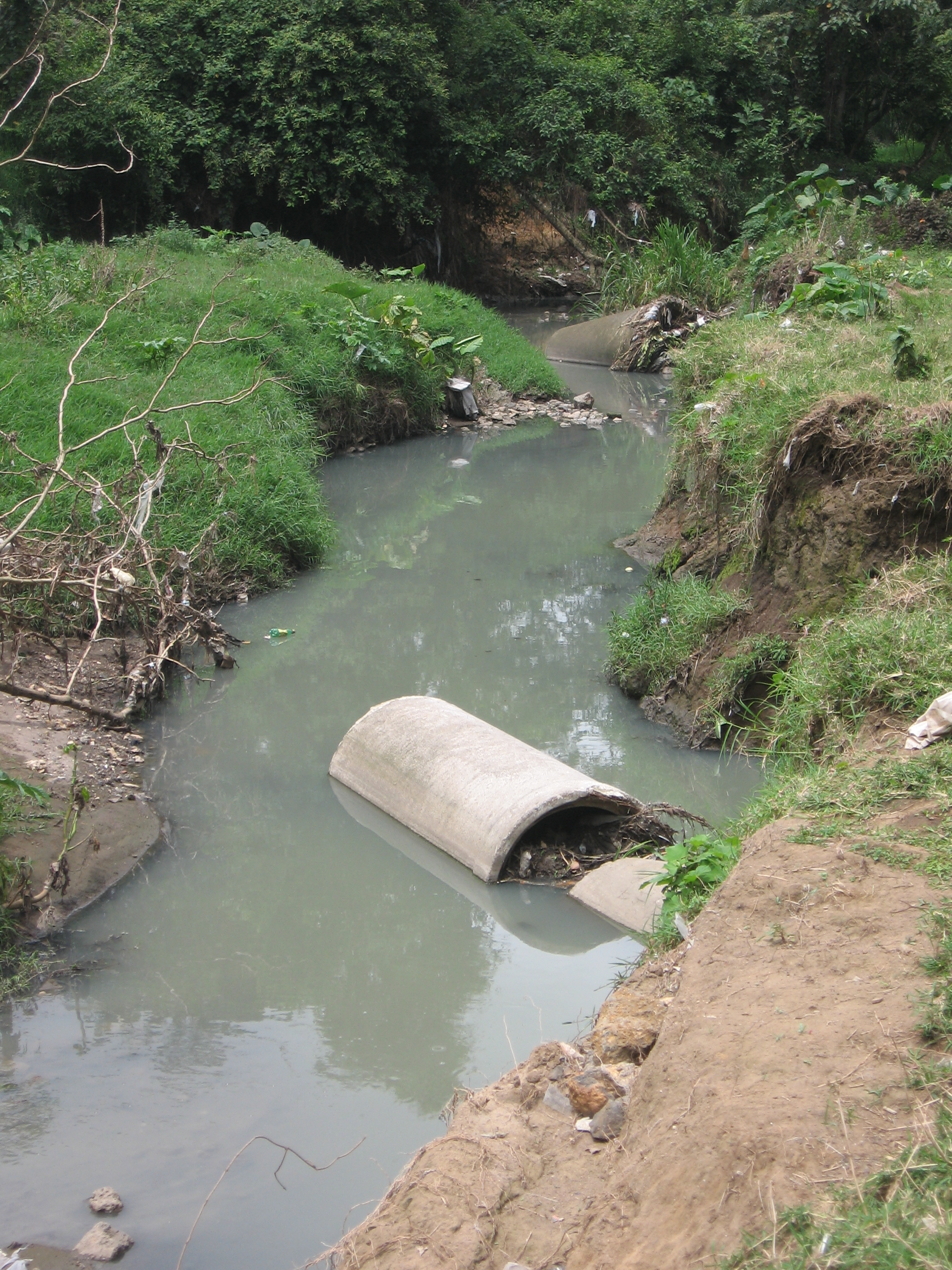
Crumbling Infrastructure in Jalapa, Veracruz, Mexico in 2008, as discussed in Herrera 2014; photo by the author.

Data sharing vs. production transparency vs. analytic transparency. I think there is a lot of confusion about what transparency entails for qualitative researchers. One of the things I learned through this process is that sharing one’s data is just one aspect of transparency. Creating more information for readers about how your data was produced (either by you or someone else – production transparency) and explaining the pathway from data source to analytical claim (analytic transparency) are not the same as sharing some portion of the data. The first two can be done without the third.

Better citations without transparency annotations are possible.  What is a “transparency annotation?” Such annotations are similar to really excellent (or “meaty”) footnotes, but are more structured. As a QDR piloteer, it was really nice to get some guidance on what these should look like. Creating them forced me into a particular structure and organization that was very helpful. Although QDR’s guidance on this point has evolved, the current suggestions for engaging in Annotation for Transparent Inquiry (ATI), (which is available here) list the following four components for each annotation anchored to a text segment:

  1. A full citation to the underlying data source
  2. An analytic note: discussion that illustrates how the data were generated and how they support the empirical claim or conclusion being annotated in the text;
  3. A source excerpt: typically 100 to 150 words from a textual source; for handwritten material, audiovisual material, or material generated through interviews or focus groups, an excerpt from the transcription;
  4. A source excerpt translation: if the excerpt is not in English, a translation of the key passage(s).

Selecting what to be transparent about. Researchers choose which analytical claims need a “transparency annotation” and which do not.  Just as authors don’t include a citation for every single sentence in a journal article, and lawyers presenting a case offer only the exhibits they believe will most strongly sway the jury or judge, researchers should and do select the appropriate number and placement of annotations within their text. Typically annotations would be created for the most critical analytical, descriptive or causal claims or for a claim that will be controversial vis-a-vis established literature.

“Fair Use” is your friend: Using supplements as a proxy for data sharing. Fair use in U.S. copyright law allows scholars to include a portion of work that is the intellectual property of someone else in their own work for scholarly purposes, such as comment or analysis. Offering a 50-150-word excerpt from a data source is a safe and easy way to share a small portion of the data in an appendix without infringing on copyright. For sources that are widely available, it will be easy for others to find the source if they are so inclined (for example, for scholarly sources, or publicly available government documents or international development reports).

Data sharing is not all or nothing. Researchers can choose which data to share and which to not share within a single project. Researchers may choose to share a select portion of sources, based on whether or not any one of them is critical to the claims being made and the overall analytic, causal or descriptive inference of the research; and/or based on copyright and human subjects considerations. Moreover, they can share different amounts of data from different data sources – a small segment in the case of one data source, or the whole source in another case. Scholars are only encouraged to share data sources if they can do so within copyright law, while complying with human subjects protections protocols, and without assuming undue burden. In my QDR experience, I shared some of my data but not all of it, and I relied on sharing excerpts frequently under the “fair use” copyright principle.

Data repositories offer differentiated sharing. Sources can be shared in a data repository like QDR, which houses data and provides differentiated data sharing options. Researchers are able to set the data access conditions for each project, or each data source; these options range from making data available to QDR registered users only, making available only data summaries, having secondary users request permission to access certain data files, etc. Different access controls can be placed on different data from the same project.

The Burdens: Time and Effort

Technology.  I was among the first researchers to use the software that was also simultaneously being developed, and a number of technical difficulties arose that made the process take longer than it otherwise would have. These are being worked out now and the technological advances in terms of ease of use are fast paced. You can read more about the transitions to an easier-to-use technology for QDR users here and here, and see a very cool example of the current ATI technology platform using hypothes.is here.
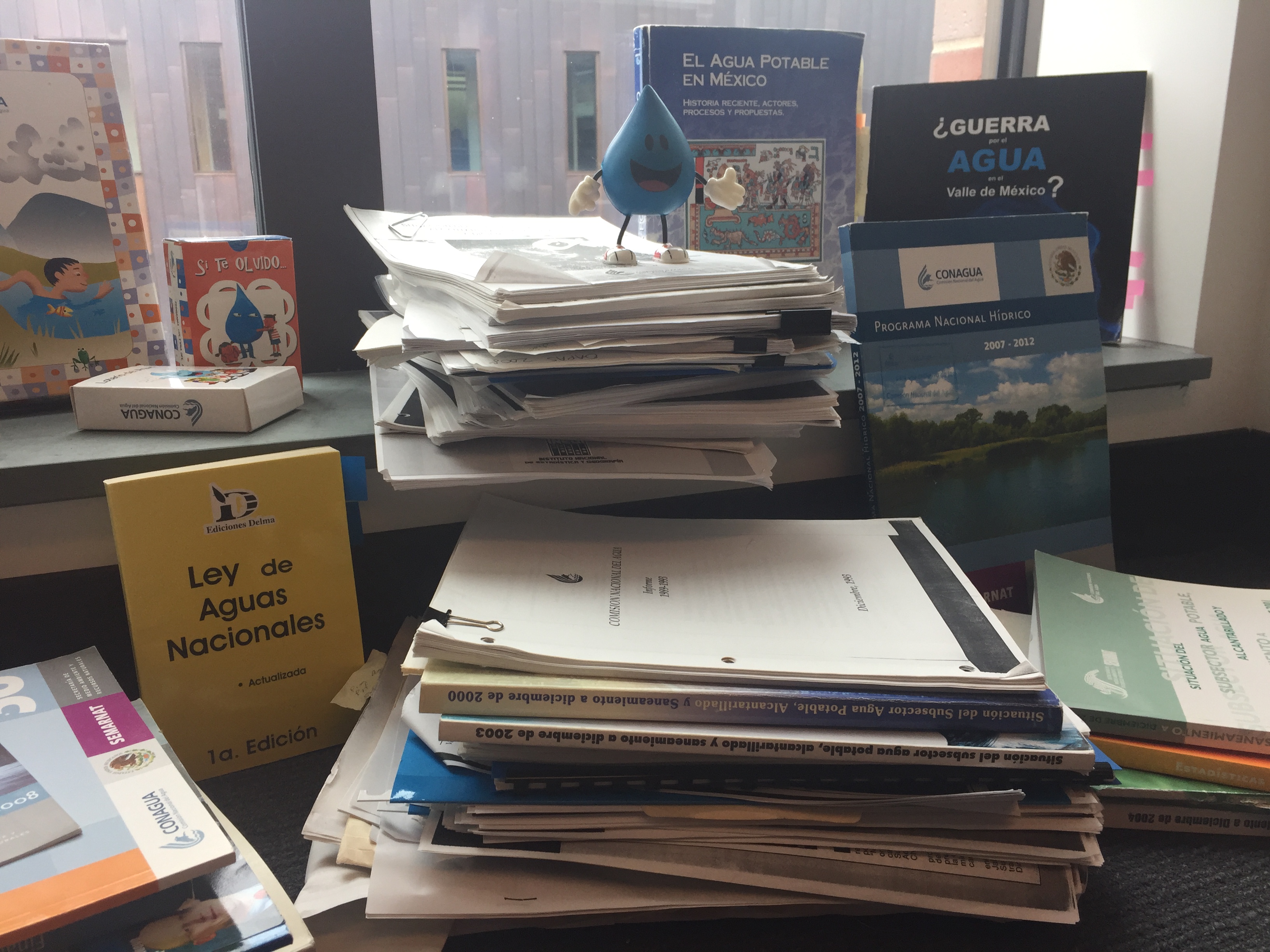
Examples of multi-media sources used by author, 2017; photo by the author.

Data organization. Engaging in Active Citation (AC) made me better organize my data sources, in terms of putting all of my sources in one well labeled location, labeling sources clearly and creating an index for my sources. This level of organization was necessary for the AC project even if I didn’t actually share a particular source because I had to have a copy of it or notes about it to be able to create a transparency annotation for it. I quickly realized that if an item wasn’t in my own saved collection, it couldn’t serve as a direct source. That is, a claim could be based on background knowledge and I could note that in a footnote, but I couldn’t cite a source that didn’t exist. This seems obvious, but I think researchers sometimes get confused about what they are citing as background knowledge and what they are citing as a very concrete source and doing a project of this type quickly sorts that out. This retroactive reorganization of my data resulted in a time commitment the first time I did it, but since then I follow a similar pattern of data organization for any new projects, and so it’s now my data organization system.

Logistics and Admin. Coordinating with QDR took time, and I was able to have RA support for small administrative work that was time-consuming but necessary. These tasks included, for example, getting data sources organized and properly labeled, and in some cases scanning or finding sources that I had lost or misplaced initially. These are the types of activities you may do as a researcher to get your project organized anyway, and I now organize my documents in a similar fashion for new projects. So, while there are start up costs, the return is really great.

Translating excerpts was a chore. I translated from the Spanish to English for my source excerpts and that took a while. Moving forward, it seems clear that translating should remain what it is – just a suggestion – because having the source in another language other than English is not against transparency practices per se, but rather not as useful for secondary users who don’t speak that language. This item brings up the question of the value of transparency for different audiences.

Production transparency notes. Noting where I got the data source and/or who gave it to me was not difficult, but did force me to go through interview notes and some audio files a few times. This could be avoided if you keep track of information about data capture strategies during data collection. (Which I now do, believe me!) Nevertheless, this component was the most straightforward and least time consuming for my particular project.

Analytical transparency notes. This was the hardest part, because it forces you to really think through why and how a source is supporting a claim. Researchers will use their own training, epistemology, and research objectives and methodologies here, and there will be a lot of choices made about what to include, and how to make it clear to the reader what your thinking was in a concise way. This process definitely forced me to take out some sources that I had used in the first draft of the article submission as I worked on my R&R. After really thinking through certain claims and sources using the logic of analytical transparency, I realized that some sources no longer fit well. Some sources were illustrative but not representative (when I realized I needed them to be the latter and not the former). Sometimes I realized that my reasoning about using sources was too vague and unclear. So I chose a better source or re-articulated the claim to fit more clearly what the related source was conveying. This process of writing analytical notes while drafting or revising, while difficult, makes our work more rigorous. Doing this for QDR has changed my practices moving forward for the better.

What about background knowledge, context or priors? The AC guidelines I used didn’t offer pointers for incorporating the background knowledge and context that underlie some of my claims. This is something that is of concern to many qualitative researchers, and for good reason. However, researchers being clear in a methodology section or, better yet, in a methodological narrative as an appendix, can clarify their experience, background knowledge and scope of authority that informed the overall project. This type of detailed explanation is incredibly helpful in general and will be useful to researchers evaluating the work. We see this sometimes in books in a way that is particularly helpful (e.g., Abers & Keck, 2006; Hadden, 2015) but less often in journal articles due to word limits. Adopting this approach more widely moving forward, especially in the form of online appendices, when printed word count is limited, would be good practice.

References

Abers, R. N. and Keck, M. E. 2006, “Muddy Waters: The Political Construction of Deliberative River Basin Governance in Brazil.” International Journal of Urban and Regional Research, 30: 601–622. https://doi.org/10.1111/j.1468-2427.2006.00691.x

Hadden, Jennifer. 2015. Networks of Contention: The Divisive Politics of Climate Change. Cambridge University Press. https://doi.org/10.1017/CBO9781316105542

Herrera, Veronica. 2014. “Does Commercialization Undermine the Benefits of Decentralization for Local Services Provision? Evidence from Mexico’s Urban Water and Sanitation Sector.” World Development. 56 (April): 16–31.https://doi.org/10.1016/j.worlddev.2013.10.008

Moravcsik, Andrew. 2014. “Transparency: The Revolution in Qualitative Research.” Symposium: Openness in Political Science. PS: Perspectives on Politics. 47(1): 48–53. https://doi.org/10.1017/S1049096513001789